
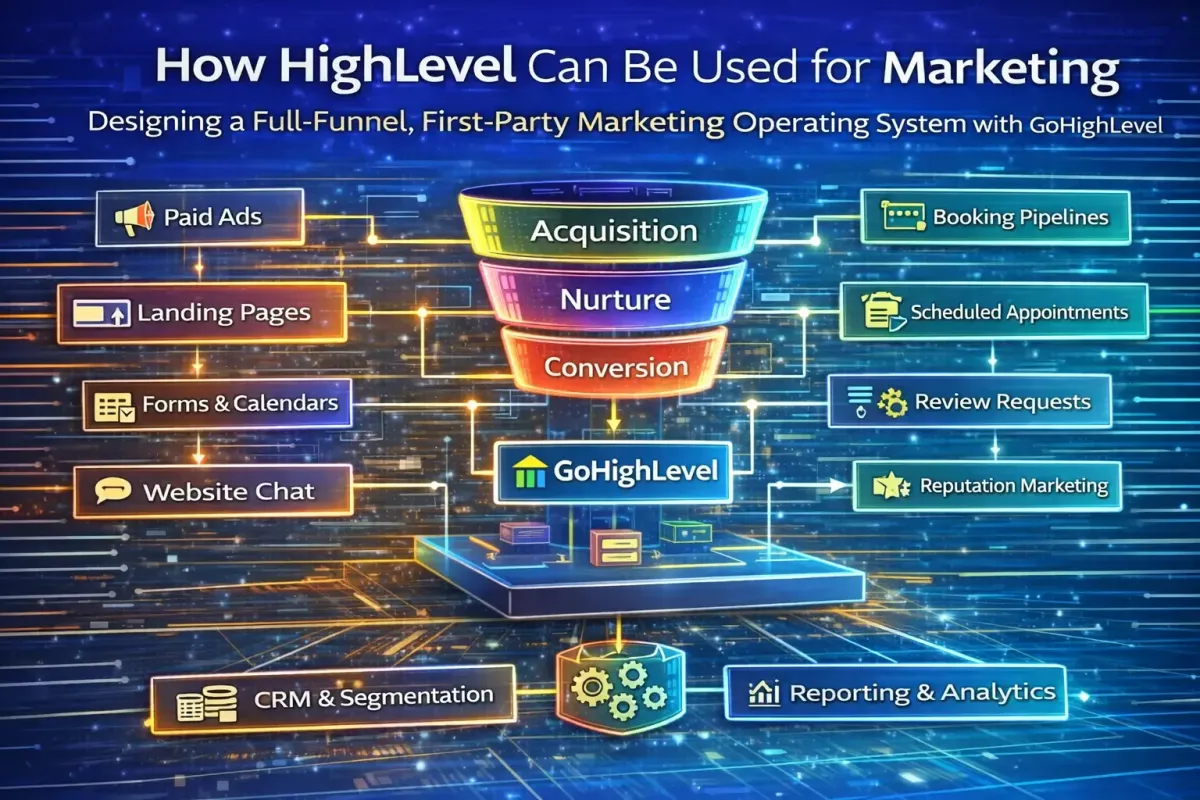
How HighLevel Can Be Used for Marketing
Modern marketing has reached a paradoxical point. Businesses have access to more tools, channels, and data than ever before—yet many struggle to convert demand efficiently, attribute revenue accurately, or scale without adding operational complexity.
The issue is rarely a lack of traffic or tactics. It is the absence of a connected marketing system.
This is where HighLevel (often referred to as GoHighLevel or GHL) fundamentally changes how marketing is executed. Rather than acting as a single-purpose tool—email platform, funnel builder, CRM, or scheduler—HighLevel functions as a marketing operating system. It centralises lead capture, lifecycle automation, communications, attribution, and optimisation into one environment.
When implemented properly, HighLevel allows marketing teams and agencies to:
Capture demand from multiple channels
Respond faster than competitors
Nurture leads systematically across email, SMS, chat, and calls
Convert interest into booked appointments and revenue
Retain customers through structured follow-up and reputation marketing
Measure outcomes using first-party lifecycle data rather than vanity metrics
The difference between using HighLevel and using it effectively for marketing lies in whether the platform is configured around a measurable customer lifecycle rather than disconnected funnels and automations.
This guide explains how to architect HighLevel as a full-funnel marketing engine, from acquisition through retention, using a structured, scalable approach.
1. HighLevel as a Marketing Operating System (Not Just a Tool Stack)
HighLevel is frequently described as an “all-in-one” platform. While accurate, that description understates its strategic value.
At its best, HighLevel replaces and consolidates tools such as:
CRMs
Email marketing platforms
SMS and calling tools
Funnel builders
Scheduling software
Review management platforms
Basic marketing analytics
More importantly, it unifies the data layer. Every lead, interaction, booking, reply, and conversion is recorded in a single system, enabling marketing decisions to be driven by outcomes rather than assumptions.
The Five Core Marketing Layers in HighLevel
A well-architected HighLevel account supports five interdependent marketing layers:
Acquisition Layer – How demand enters the system
Conversion Layer – How interest becomes action
Nurture Layer – How demand is created and sustained
Data Layer – How segmentation and intelligence are maintained
Measurement Layer – How performance is evaluated and improved
Most marketing stacks fracture these layers across multiple platforms. HighLevel consolidates them into one execution environment.

2. Lead Capture: Designing High-Intent Entry Points
Marketing begins with demand capture. HighLevel provides multiple native tools to turn traffic into leads without relying on external platforms.
Funnels, Landing Pages, and Websites
HighLevel includes a drag-and-drop page and funnel builder that can be used to create:
Lead generation landing pages
Service offer pages
Application funnels
Webinar and event registrations
Location-specific service pages
Full multi-page websites
From a marketing standpoint, these assets are not just design elements. They are a conversion infrastructure.
Best-practice principles include:
One primary CTA per page
Multi-step forms to increase completion rates
Embedded calendars for immediate booking
Trust elements such as reviews, guarantees, and credentials
Mobile-first layouts optimised for speed and clarity
Forms, Surveys, and Chat: Choosing the Right Capture Mechanism
HighLevel offers three primary lead capture mechanisms, each serving a different intent level.
Forms
Best for simple lead capture and direct pipeline creation.
Surveys
Ideal for qualification, segmentation, and scoring. Surveys enable conditional logic, allowing marketing teams to filter and route leads based on budget, timeline, or need.
Chat Widgets
High-intent, low-friction capture—particularly effective on mobile. Website chat moves conversations directly into SMS or messaging threads, preventing lead loss once visitors leave the site.
Calendars as Marketing Assets
In HighLevel, calendars are not merely scheduling tools. They are conversion assets.
Key marketing uses include:
Different calendars per offer, service, or lead type
Round-robin booking for sales teams
Buffer rules and availability logic
Pre-appointment questionnaires
Integrated payment collection
Calendars close the gap between interest and action, which directly impacts lead-to-customer conversion rates.
3. Speed-to-Lead: The Highest ROI Marketing Automation
Across most industries, the single most profitable marketing automation is speed-to-lead.
HighLevel enables near-instant response through workflows that trigger the moment a lead is captured.
A Typical Speed-to-Lead Workflow
Trigger:
Form submission
Chat initiated
Missed phone call
Facebook Lead Ad submission
Immediate Actions (0–60 seconds):
SMS confirmation with next step
Email with context, proof, and calendar link
Opportunity creation in pipeline
Lead owner assignment
Escalation:
Follow-up SMS if no response
Task created for manual call
Persistence:
Multi-day SMS/email cadence
Behaviour-based branching
Marketing Impact
Higher lead-to-appointment rates
Lower effective cost per acquisition
Reduced lead leakage
More accurate attribution
Speed-to-lead often determines whether paid traffic is profitable or wasted.
4. Multi-Channel Marketing Automation with Workflows
HighLevel’s workflow builder is the engine that powers multi-channel marketing.
Workflows allow marketers to define trigger → logic → action sequences across email, SMS, calls, voicemail drops, and social messaging.
Core Workflow Capabilities
Event-based triggers (form fills, replies, bookings)
Conditional logic (if/else branching)
Delays and timing controls
Cross-channel actions
Internal task creation
Example Lead Nurture Sequence
Day 0: Welcome email + SMS confirmation
Day 2: Value-driven follow-up
Day 4: Case study email
Day 7: SMS check-in
Day 10: Booking reminder
Branching based on replies or bookings
The key advantage is behaviour-driven progression, not fixed drip campaigns.
5. Segmentation: Turning the CRM into a Marketing Engine
HighLevel’s CRM becomes powerful when segmentation is deliberate and governed.
Core Segmentation Dimensions
Lead source (Google Ads, organic, referrals)
Entry offer or funnel
Intent level
Lifecycle stage
Persona or service category
Tools Used for Segmentation
Custom fields (structured data)
Tags (temporary or campaign-specific labels)
Smart Lists (dynamic audiences)
Pipeline stages
Rule of thumb: Use fields for anything you plan to report on. Use tags for short-term or tactical labels.
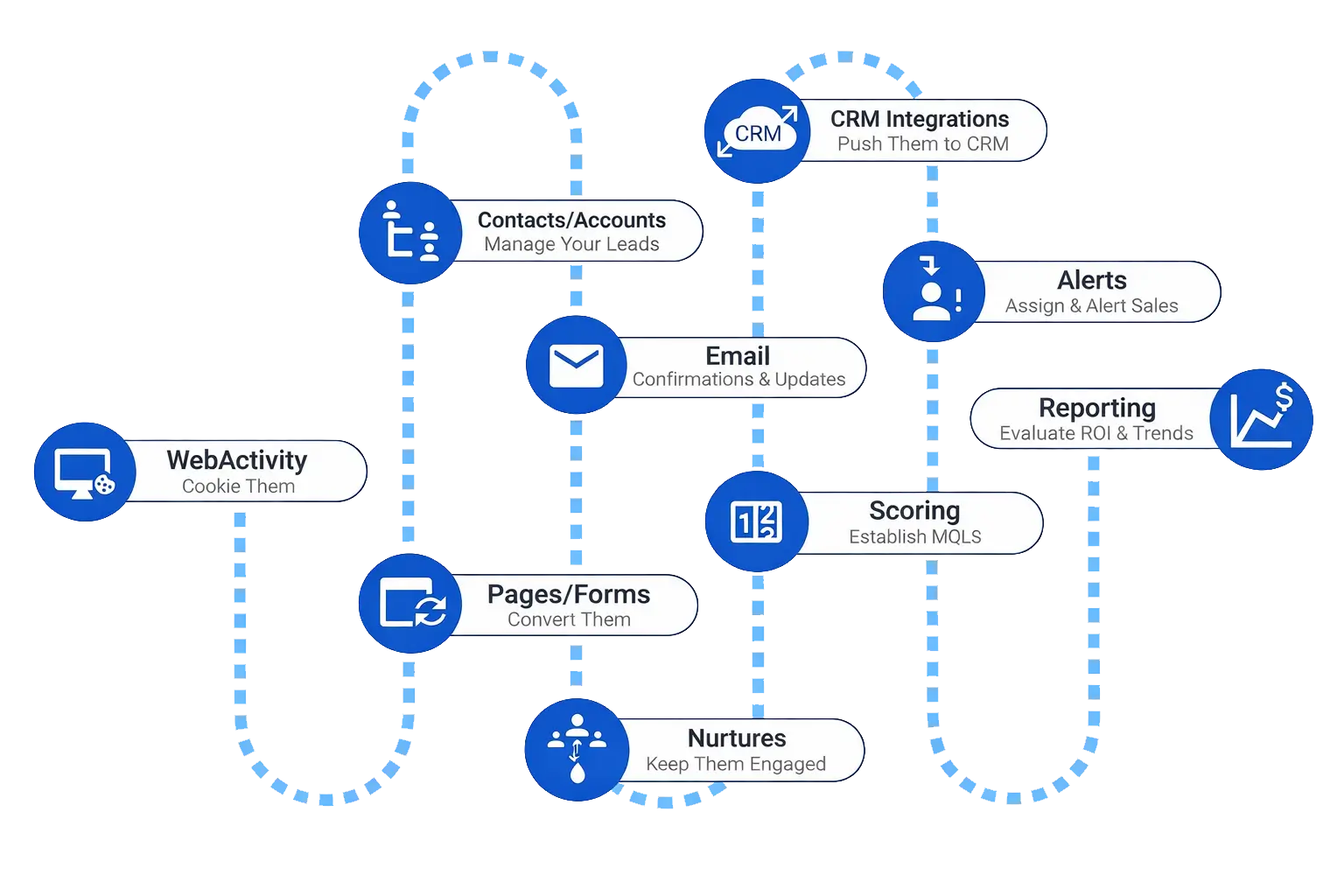
6. Lead Scoring and Marketing Prioritisation
Lead scoring in HighLevel is less about numerical scores and more about decision automation.
Scoring inputs may include:
Survey responses
Engagement signals
Appointment behaviour
Sales feedback
Outcomes include:
Routing high-intent leads to sales
Placing mid-intent leads into nurture
Suppressing low-quality leads
This improves both marketing efficiency and sales effectiveness.
7. Email Marketing: Lifecycle-First, Not Newsletter-Only
HighLevel supports both broadcast campaigns and automated sequences.
High-Performing Lifecycle Sequences
New lead welcome
Abandoned booking recovery
No-show follow-up
Post-consult nurturing
Long-cycle education
Win-back campaigns
Deliverability Considerations
Proper domain authentication
Gradual warming
List hygiene
Consistent sending patterns
Email works best in HighLevel when aligned to lifecycle stages, not generic blasts.
8. SMS Marketing: High Response, High Responsibility
SMS is one of HighLevel’s strongest channels.
Best uses include:
Speed-to-lead confirmations
Appointment reminders
Re-engagement prompts
Review requests
Governance is critical:
Explicit consent
Frequency caps
Clear sender identification
Opt-out handling
Used correctly, SMS significantly outperforms email for time-sensitive communication.
9. Centralised Conversations and AI Assistance
HighLevel’s unified inbox centralises:
SMS
Email
WhatsApp
Facebook and Instagram messages
This enables:
Full conversation context
Clean handoffs between marketing and sales
Behaviour-driven automation
AI features can assist with:
First-response drafting
FAQ handling
Conversation summaries
Message classification
AI should increase speed and consistency—not replace accountability.

10. Reputation Marketing as a Demand Engine
Reviews are not just social proof; they are a conversion multiplier.
HighLevel automates:
Review requests after service completion
Routing satisfied customers to public reviews
Private feedback collection for service recovery
Marketing outcomes include:
Higher landing page conversion rates
Stronger local visibility
Reusable copy for ads and funnels
11. Paid Media and Closed-Loop Attribution
HighLevel sits downstream of paid traffic platforms, capturing first-party data.
Best-practice outcomes include:
Source and campaign tracking
Opportunity creation with timestamps
Revenue attribution
Offline conversion tracking
This enables optimisation based on:
Cost per booked appointment
Cost per sale
Revenue per lead
12. Governance: Preventing Automation Sprawl
Uncontrolled growth is the fastest way to break a HighLevel marketing system.
Governance essentials:
Naming conventions
Lifecycle definitions
Workflow ownership
Quarterly audits
Marketing systems scale when structure is enforced.
13. Recommended Marketing Build Order
Define lifecycle and KPIs
Configure pipelines
Build offers and funnels
Implement lead capture and calendars
Deploy speed-to-lead workflows
Add qualification and routing
Launch core nurture sequences
Implement review automation
Establish reporting cadence
Conclusion: HighLevel as a Scalable Marketing Engine
HighLevel is not simply a marketing tool. When architected correctly, it is a full-funnel marketing operating system that enables businesses to capture demand, convert it efficiently, nurture relationships, and measure real ROI using first-party data.
Its true power emerges when workflows, CRM data, communications, and analytics are orchestrated around a clearly defined lifecycle:
Lead → Booked → Showed → Sold → Retained
For marketing teams and agencies, this approach reduces manual effort, increases conversion rates, improves attribution, and allows growth without proportional increases in headcount.
The most successful implementations start small, focus on outcomes, and expand deliberately. HighLevel rewards discipline, clarity, and systems thinking—and when those are present, it becomes one of the most powerful marketing platforms available today.