
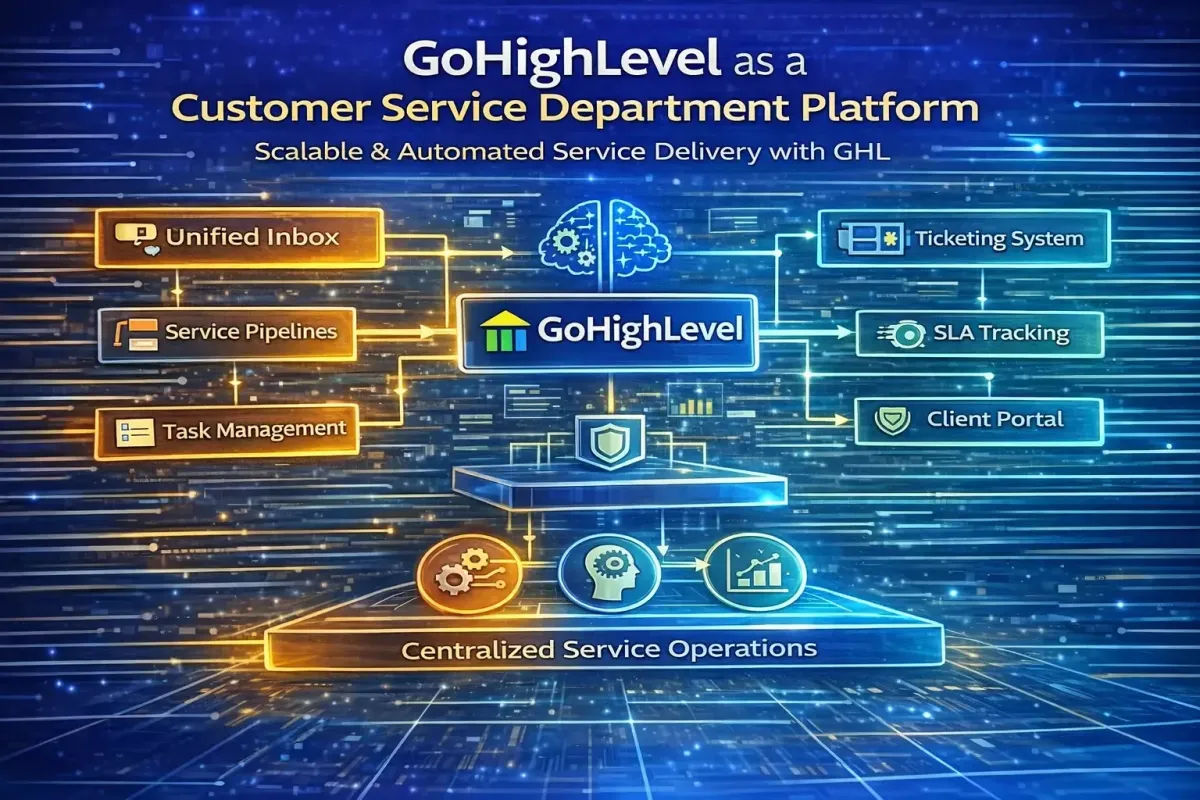
HighLevel as a Customer Service Platform | Scalable Support with GHL
Go High Level (GHL) is frequently positioned as an all-in-one platform for marketing and sales. While that positioning is accurate, it is incomplete. When architected correctly, GHL functions as a full customer service delivery platform—capable of replacing traditional helpdesks, fragmented communication tools, and disconnected CRMs.
For service-based businesses—agencies, consultancies, professional services firms, healthcare providers, trades, and B2B operators—customer service is not an add-on. It is the product. GHL’s real strength lies in its ability to coordinate people, processes, communication, automation, and data inside a single execution environment.
This guide reframes GHL from a marketing-centric tool into a service operations system, designed around SLAs, accountability, client experience, and scalability.
1. Reframing Go High Level for Customer Service Operations
Most organisations under-leverage GHL because they stop using it once a deal is closed. In mature service organisations, the post-sale lifecycle is where the majority of cost, risk, and value creation occurs.
When used as a customer service platform, GHL orchestrates:
Client communications across all channels
Service requests, tickets, and case states. (Tasks can be used as tickets, with their own funnels)
Internal task routing and ownership
SLA tracking and escalation
Status updates and expectation management
Quality control and service performance reporting
At its core, customer service is about controlled flow: requests enter the system, are triaged, worked, communicated, and resolved with consistency. GHL excels at this because it combines CRM records, conversations, workflows, and pipelines into a single operational layer.
2. Core Architecture of a Customer Services Department in GHL
A robust service delivery implementation in GHL is built on five interlocking layers:
Contact & Account Records – the full customer context
Conversation Channels – where service interactions occur
Service Pipelines – how work is tracked and governed
Workflows & Automation – how requests are processed
Reporting & Governance – how performance is measured
Each layer reinforces the others. Weakness in any one creates friction, delays, or inconsistency.
3. Centralised Service Communications: A Single Source of Truth
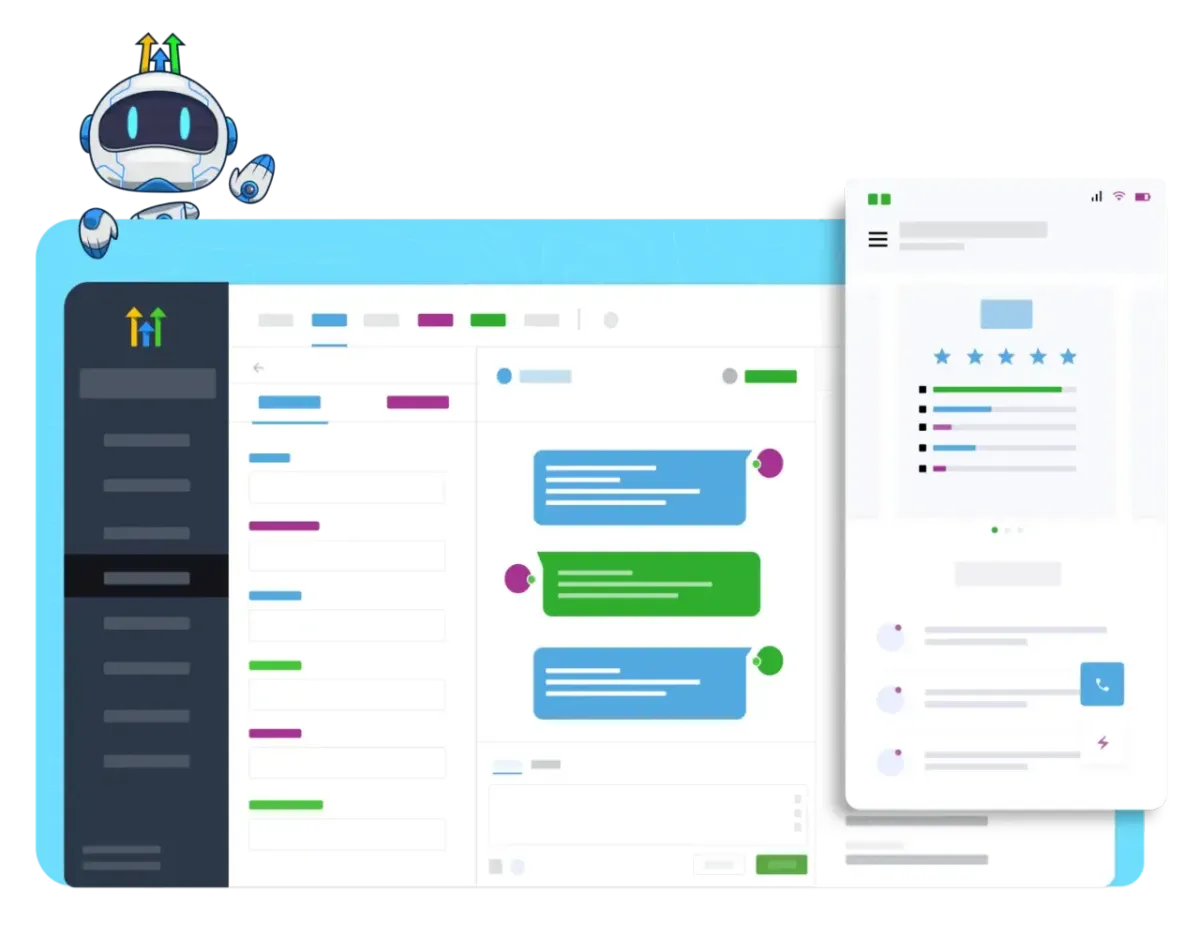
Unified Conversations Inbox
GHL’s Conversations Inbox consolidates all customer communications into one interface:
Email
SMS
Live web chat
WhatsApp
Facebook Messenger
Instagram DMs
Google Business Profile messages
Inbound and outbound call logs
From a service-delivery perspective, this eliminates one of the biggest operational failures in customer support: channel fragmentation.
Operational Impact
No missed messages or forgotten tickets
Clear ownership of conversations
Full historical context visible to any agent
Faster resolution due to contextual awareness
Agents no longer waste time switching tools or asking clients to repeat information. The entire relationship history—sales, onboarding, service, billing—lives in one record.
Internal Notes and Handover Context
Agents can add internal notes directly to conversations and contact records. These notes are invisible to clients but critical for:
Escalations
Shift handovers
Multi-agent collaboration
QA and audit trails
This replaces scattered Slack threads, emails, or private notes with a structured, auditable system.
4. Service Pipelines as Ticketing and Case Management
Pipelines Are Not Just for Sales
In a customer service context, pipelines represent work states, not revenue stages. A well-designed service pipeline might include:
New Request
Acknowledged
In Progress
Waiting on Client
Internal Review
Completed
Escalated / Blocked
Each pipeline card becomes a living service record, linked to:
The client account
All related conversations
Automation state and SLA timers
Internal tasks and ownership
Why Pipelines Matter for Service Teams
Visual workload management
Clear accountability at each stage
Predictable hand-offs between roles
SLA enforcement without spreadsheets
Reduced reliance on external helpdesk tools
When implemented correctly, pipelines can replace tools like Zendesk, Freshdesk, or Help Scout for many SMB and mid-market teams.
5. Intelligent Intake and Request Routing
Multi-Channel Service Intake
Service requests can originate from:
Website chat widgets
Support email addresses
Web forms and surveys
SMS or WhatsApp replies
Booking links
Inbound phone calls
GHL workflows standardise these inputs into a single intake logic, ensuring nothing bypasses triage.
Automated Classification and Routing
Using workflows, service requests can be automatically:
Tagged by service type (support, onboarding, billing, technical)
Routed to the correct service pipeline
Assigned to the correct team or agent
Prioritised based on client tier or SLA
This removes subjective decision-making from repetitive triage, ensuring consistency regardless of volume.
6. SLA Enforcement and Service Governance
Time-Based Automation
GHL workflows can monitor how long a request remains in each pipeline stage and trigger actions such as:
Internal alerts when SLAs are at risk
Automatic escalation to senior staff
Client updates if delays occur
This transforms customer service from reactive firefighting into system-governed delivery.
Client Tier and Contract Logic
Higher-value or contracted SLA clients can receive:
Faster routing
Priority agent assignment
Different escalation thresholds
More proactive communication
All of this logic lives centrally in workflows, avoiding duplicated processes or manual exceptions.

7. Proactive Client Communication During Service Delivery
Automated Status Updates
One of the biggest drivers of inbound service volume is uncertainty. Clients chase updates when they don’t know what’s happening.
As pipeline stages change, GHL can automatically:
Confirm receipt of requests
Notify clients when work starts
Request additional information
Confirm resolution with next steps
This reduces inbound “checking in” messages while increasing perceived service quality.
Hybrid Human + Automation Model
Automation handles predictable updates. Humans handle nuance and judgment. This hybrid model allows teams to scale without sacrificing trust or experience.
8. Internal Task Management and Cross-Team Coordination
Workflow-Driven Tasks
Service delivery often spans multiple departments—support, operations, finance, and implementation. GHL workflows can:
Create internal tasks
Assign them based on request type
Notify stakeholders automatically
Close tasks when conditions are met
Elimination of Shadow Systems
When service tasks live inside GHL, organisations avoid:
Spreadsheets
Email chains
Untracked Slack messages
Manual follow-ups
This improves accountability, auditability, and operational clarity.
9. Client Portals and Self-Service Enablement
GHL allows the creation of branded client portals where customers can:
View service or ticket status
Access documentation and deliverables
Submit new service requests
Review historical interactions
From a service-delivery standpoint, portals:
Reduce inbound volume
Increase transparency
Improve trust and retention
Self-service is not about deflection; it is about empowerment and efficiency.
10. AI-Assisted Service Delivery (“AI Employees”)
Conversation AI
GHL’s Conversation AI can be trained on your business data to:
Answer common FAQs instantly
Qualify and route service requests
Offer booking links for support calls
Operate 24/7 across chat and messaging
Voice AI
Voice AI acts as a virtual receptionist or support agent:
Answers inbound calls
Collects information
Routes or books appointments
Logs interactions automatically
Strategic Role of AI
AI should not replace human agents. It should:
Handle repetitive, low-risk interactions
Draft responses for human review
Assist with triage and prioritisation
This increases capacity without increasing headcount.
11. Reputation Management as an Extension of Customer Service
Customer service quality directly impacts public reputation.
Automated Review Requests
Once a service request is resolved, GHL can automatically:
Send review requests via SMS or email
Direct satisfied clients to Google or Facebook
Review Monitoring and Response
Reviews can be monitored and responded to inside GHL, ensuring:
Fast response to negative feedback
Consistent brand tone
Closed feedback loops
Advanced AI sentiment analysis can flag frustrated messages before they escalate publicly.
12. Reporting, Quality Control, and Continuous Improvement
Service Performance Metrics
Using pipelines, timestamps, and tags, GHL can report on:
Average resolution time
Bottlenecks by stage
Volume by service type
Agent workload distribution
These are operational metrics, not vanity dashboards.
Feedback Loops
Post-resolution surveys can collect:
CSAT
NPS
Qualitative feedback
Low scores can trigger manager follow-ups automatically, closing the loop between service and improvement.

13. Security, Permissions, and Governance
Professional service teams require governance.
GHL supports:
Role-based access control
Separation between sales, service, and admin users
Restricted visibility for sensitive data
This enables scale without compromising data integrity or compliance.
14. Strategic Advantages Over Traditional Service Stacks
When deployed intentionally, GHL offers:
One platform instead of fragmented tools
Automation-first service execution
Lower operational overhead
Faster staff onboarding
Consistent client experience at scale
The key is design discipline. GHL must be architected as a service operating system, not “just another CRM.
15. Forward-Looking Service Delivery Model
As the AI-assisted service matures, GHL is well-positioned to support:
AI-assisted triage and drafting
Sentiment-based escalation
Predictive service demand forecasting
Hybrid human-AI service teams
These capabilities only deliver value when built on clean pipelines, disciplined workflows, and clear service ownership.
Final Perspective
Go High Level can operate as a full Customer Services Department platform when designed around service logic rather than marketing convenience.
Organisations that succeed with GHL:
Treat customer service as a system
Define clear service states and ownership
Automate communication and governance
Measure what matters operationally
Continuously refine delivery
When used this way, GHL becomes more than software. It becomes the operating backbone of scalable, high-quality service delivery.