
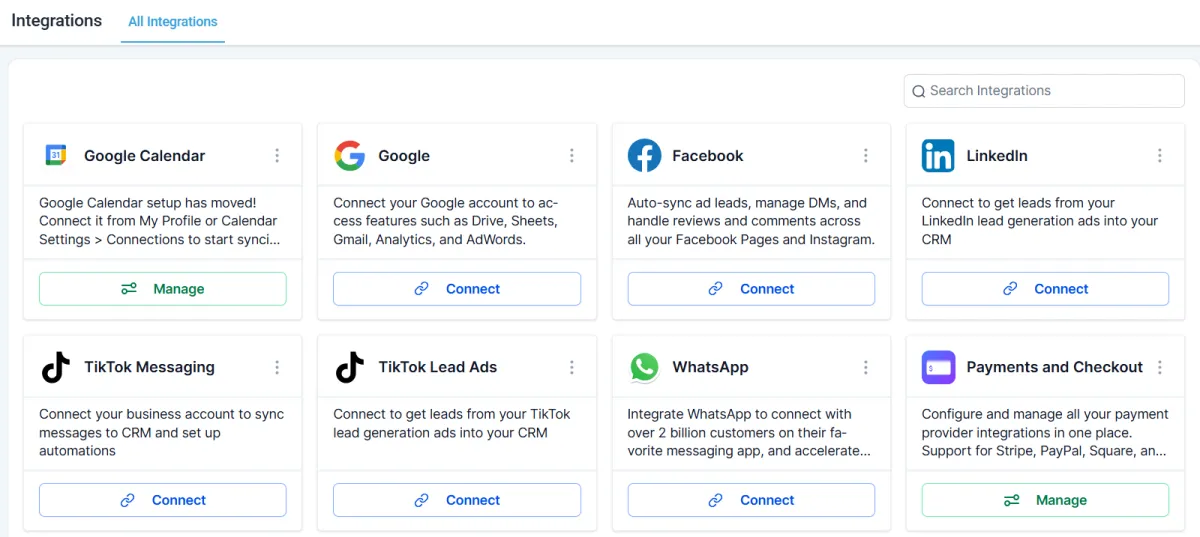
HighLevel Native Integrations
You already know HighLevel is powerful. But did you know that many of its best features come pre-built and ready to connect—without a single line of code or a third-party tool like Zapier or Make?
We're talking about native integrations.
Unlike workflow webhooks or custom API development, native integrations are created and maintained by HighLevel itself. They are designed to plug directly into your existing tech stack, whether that's Google Ads, Facebook, Stripe, or Slack.
But before you start clicking "connect," you need a plan.
This questionnaire is designed to help you identify exactly which native integrations you currently use (or plan to use), how they are structured (e.g., how many ad accounts, Facebook Pages, or tracking setups you have), and precisely how each one should connect to HighLevel.
Let's get started.
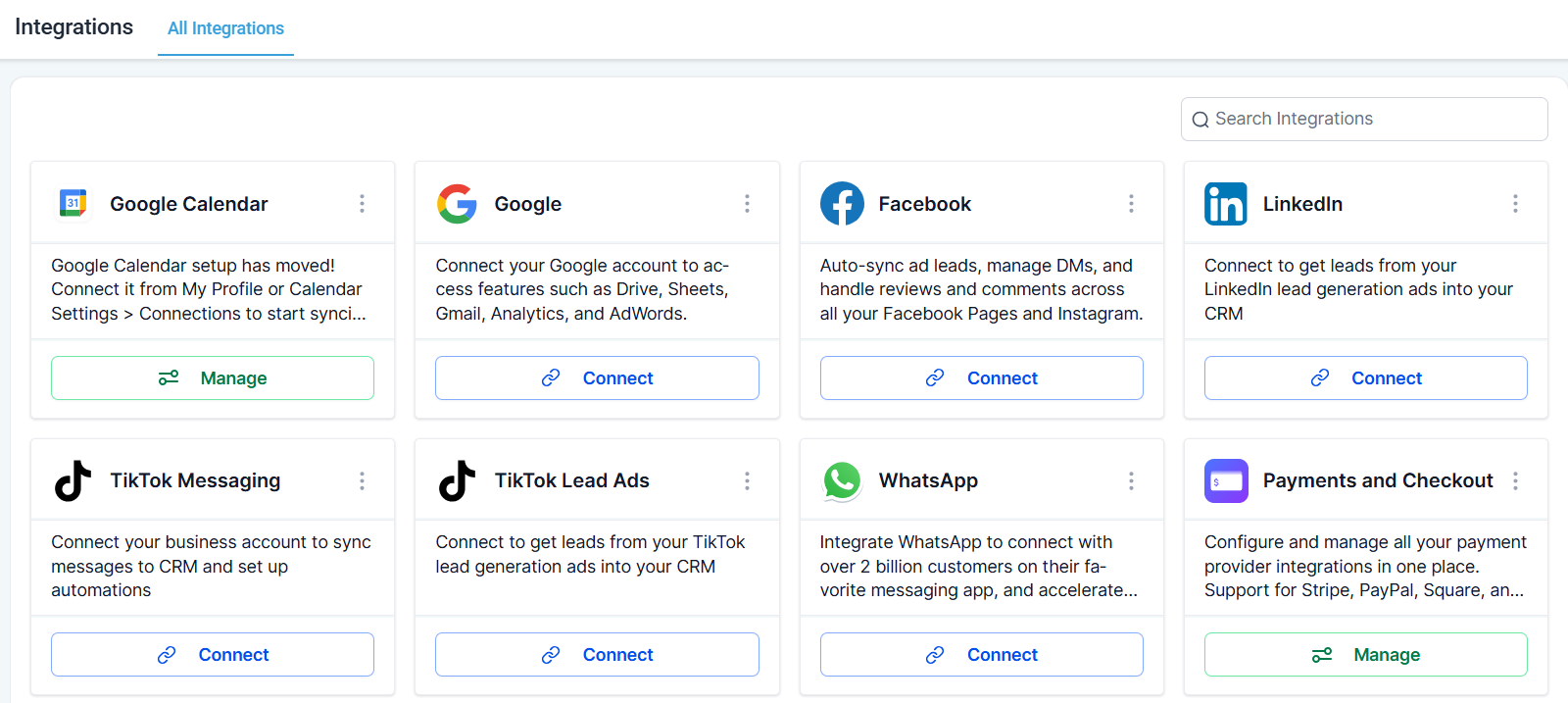
Section 1: Calendar & Communication
Google Calendar
Definition: Syncs HighLevel appointments with your Google Calendar (two-way sync).
Questions:
How many Google Calendar accounts need connecting?
Do you use multiple calendars per person (e.g., work + personal)?
Do team members need individual sync?
Microsoft 365 / Outlook Calendar
Definition: Syncs HighLevel appointments with Microsoft Exchange/Outlook calendar.
Questions:
Do you use Microsoft 365 for email/calendar?
How many Microsoft user accounts need integration?
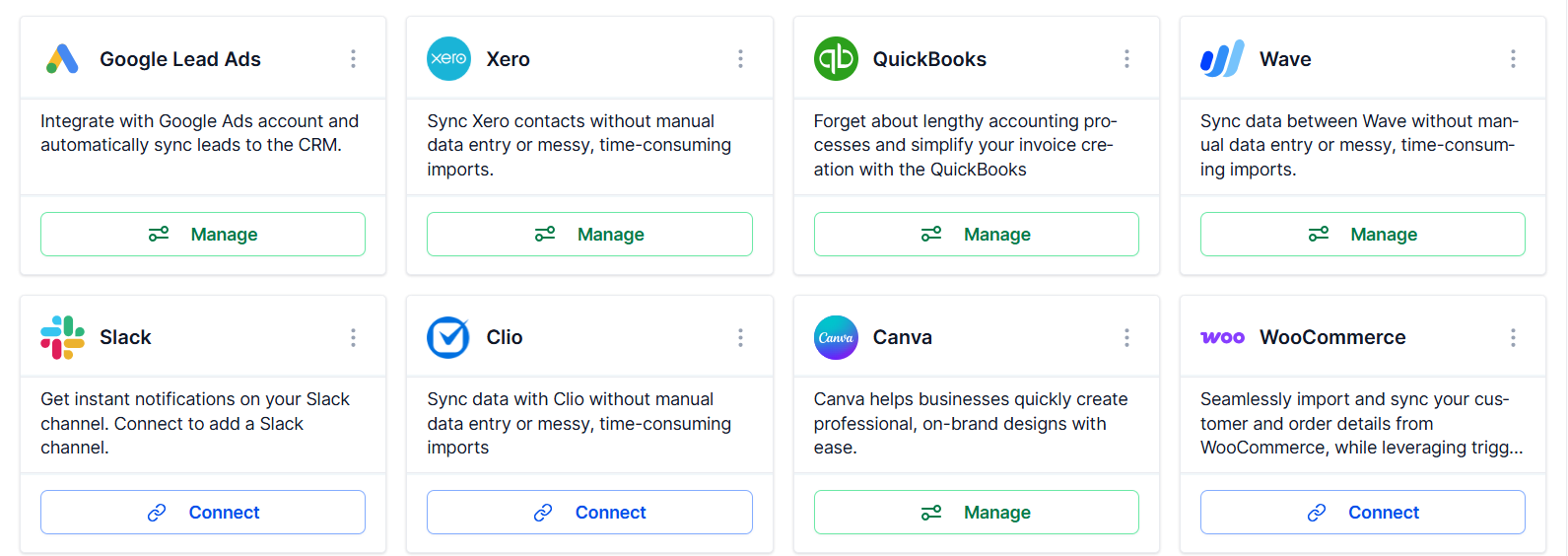
Section 2: Cloud Storage
Google Drive
Definition: Attach files from Google Drive to contacts, appointments, or campaigns.
Questions:
Do you use Google Drive?
How many Google Drive accounts or shared drives?
Do you need file access per location or per user?
Microsoft OneDrive / SharePoint
Definition: Attach files from Microsoft cloud storage to HighLevel.
Questions:
Do you use OneDrive or SharePoint?
How many SharePoint sites or OneDrive accounts?
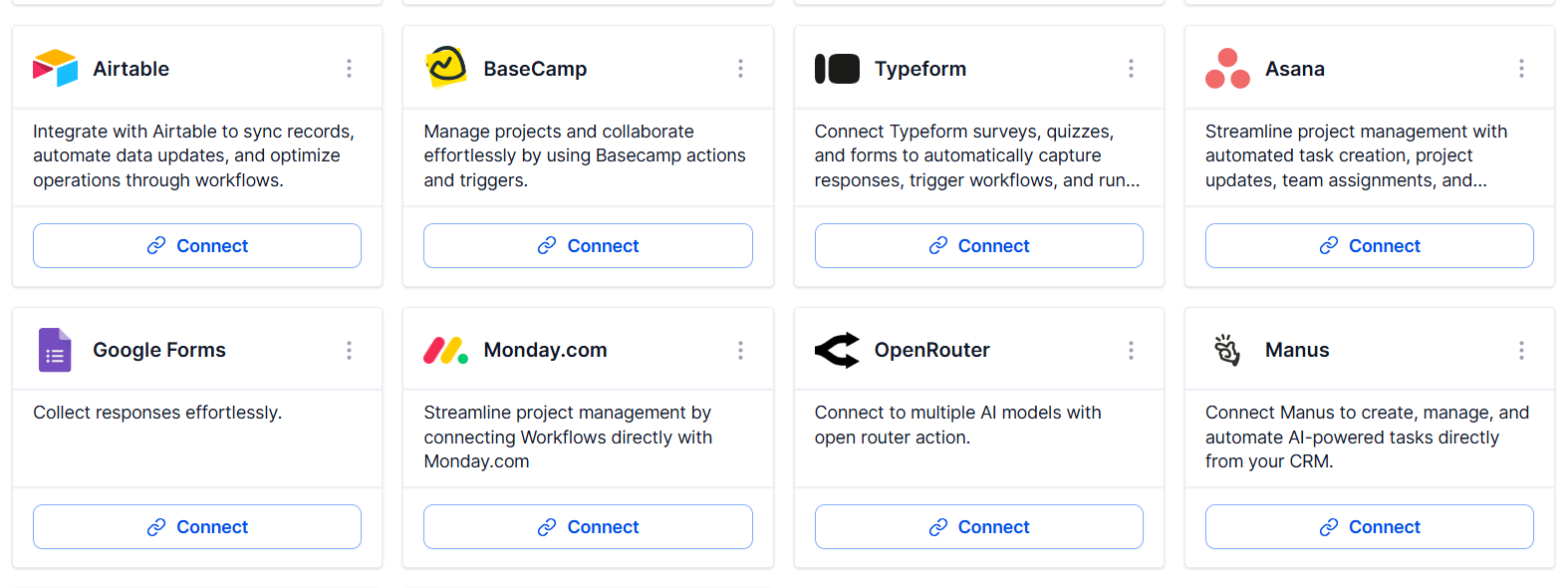
Section 3: Advertising & Tracking
Google Ads
Definition: Sync leads from Google Ads into HighLevel; offline conversion tracking.
Questions:
How many Google Ads accounts do you have?
Are your accounts inside a Google MCC (Manager Account)?
Does each website have its own Google Ads account?
Does each website have Google Tag Manager set up for conversion tracking?
Does each website have its own Google Business Profile (Google Maps)?
Are conversion tags already installed?
Facebook Ads
Definition: Import leads from Facebook/Instagram ads; offline conversions; audience management.
Questions:
How many Facebook Pages do you have?
How many Facebook Ad Accounts?
How many Facebook Business Managers?
Does each business have its own tracking pixel/dataset?
Are all ad accounts inside a single Business Manager?
LinkedIn Ads
Definition: Import leads from LinkedIn ads; offline conversion tracking.
Questions:
How many LinkedIn Company Pages?
How many LinkedIn Ad Accounts?
Do you have the LinkedIn Insight Tag (pixel) installed per website?
Will you use LinkedIn social posting from HighLevel?
TikTok Ads
Definition: Sync leads from TikTok ads; offline conversions.
Questions:
Do you use TikTok for ads, organic social, or both?
How many TikTok Business Center accounts?
How many TikTok Ad Accounts?
Do you have the TikTok pixel installed per website?
Google Analytics 4 (GA4) Report
Definition: View GA4 analytics inside HighLevel dashboard.
Questions:
How many GA4 properties do you have?
Do you need reporting per website or aggregated across all?
Meta Ads Report (Facebook + Instagram)
Definition: Native reporting on Meta ad performance inside HighLevel.
Questions:
(Refer to Facebook Ads questions above)

Section 4: Social Media Management (Organic Posting)
Facebook Page (Organic)
Definition: Schedule posts and reply to comments/messages from HighLevel Social Planner.
Questions:
How many Facebook Pages?
Do all pages share one Business Manager?
Will multiple team members manage social replies?
Instagram Business (Organic)
Definition: Post to Instagram and reply to DMs from HighLevel.
Questions:
How many Instagram Business accounts?
Do you need automated DM replies?
LinkedIn Company Page (Organic)
Definition: Post to LinkedIn Company Pages from HighLevel.
Questions:
How many LinkedIn Company Pages?
TikTok (Organic)
Definition: Post videos to TikTok from HighLevel.
Questions:
How many TikTok Business accounts?
Do you need posting for multiple brands?
YouTube, Pinterest, Snapchat
Definition: Not natively supported in HighLevel (requires Zapier/Make or webhooks).
Questions:
Do you need posting to YouTube, Pinterest, or Snapchat?
If yes, are you willing to use third-party automation?
Section 5: Messaging
WhatsApp Business
Definition: Send/receive WhatsApp messages within HighLevel inbox and automation.
Requirements: WhatsApp Business Account + dedicated phone number per HighLevel location.
Questions:
Do you have a WhatsApp Business Account approved by Meta?
How many phone numbers need WhatsApp integration?
Will you use template messages, two-way chat, or both?
Is this for sales, support, or both?
Instagram DMs
Definition: Reply to Instagram DMs from HighLevel inbox.
Questions:
How many Instagram Business accounts need DM access?
Section 6: Payment Processors
Stripe
Definition: Accept payments for invoices, memberships, and products.
Questions:
How many Stripe accounts do you have?
Does each website/brand have its own Stripe account?
Do you need subscriptions, one-time payments, or both?
PayPal
Definition: Accept payments for invoices, memberships, and products.
Questions:
How many PayPal Business accounts?
Do you need PayPal Checkout or just invoicing?
Section 7: Accounting & Invoicing
Xero
Definition: Sync invoices and payments from HighLevel to Xero.
Questions:
Do you use Xero?
How many Xero organizations?
Do you need contact sync, invoice sync, or both?
QuickBooks (Online)
Definition: Sync invoices and payments from HighLevel to QuickBooks Online.
Questions:
Do you use QuickBooks Online?
How many QuickBooks company files?
QuickBooks Desktop
Definition: Sync invoices and payments (requires bridge software).
Questions:
Do you use QuickBooks Desktop?
Wave
Definition: Sync invoices from HighLevel to Wave Accounting.
Questions:
Do you use Wave?
Section 8: Productivity & Team Collaboration
Slack
Definition: Send notifications from HighLevel workflows to Slack channels or DMs.
Questions:
Do you use Slack?
How many Slack workspaces?
What workflow triggers need to go to Slack (e.g., new lead, appointment booked)?
Microsoft Teams
Definition: Send HighLevel workflow notifications to Microsoft Teams channels.
Questions:
Do you use Microsoft Teams?
How many Teams channels need alerts?
Asana
Definition: Create tasks in Asana from HighLevel workflows.
Questions:
Do you use Asana?
How many Asana workspaces or organizations?
Do you need task creation per project or per team member?
Monday.com
Definition: Create items/updates in Monday.com from HighLevel workflows.
Questions:
Do you use Monday.com?
How many Monday.com accounts?
Canva
Definition: Open Canva from HighLevel to design images or PDFs (embedded link).
Questions:
Do you use Canva?
Is it one company account or multiple?
Do you have Brand Portfolios set up?
Section 9: Forms & Surveys
Typeform
Definition: Send Typeform submissions into HighLevel as contacts.
Questions:
Do you use Typeform?
How many Typeform workspaces?
Would HighLevel native forms be a possible replacement?
Google Forms
Definition: Send Google Form submissions into HighLevel.
Questions:
Do you use Google Forms for lead capture?
How many Google Forms?
Note: HighLevel has native forms and surveys. Please indicate if you prefer to keep external forms.
Section 10: E-commerce
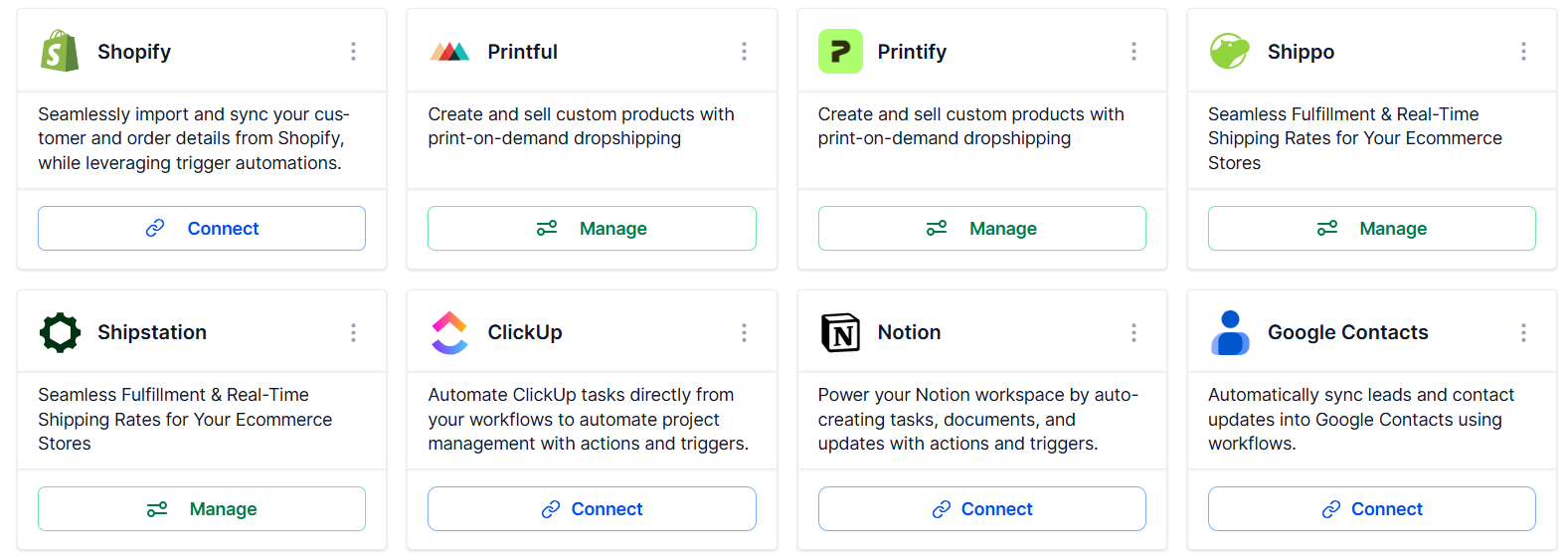
Shopify
Definition: Sync customers, orders, and products between Shopify and HighLevel.
Questions:
Do you sell physical products?
How many Shopify stores?
Do you need abandoned cart recovery via HighLevel?
WooCommerce
Definition: Sync customers and orders between WooCommerce (WordPress) and HighLevel.
Questions:
Do you use WooCommerce?
How many WooCommerce sites?
Do you need product or stock sync?
Printful
Definition: Print-on-demand fulfillment.
Questions:
Do you use Printful?
Do you need automation between HighLevel orders and Printful?
Printify
Definition: Print-on-demand fulfillment.
Questions:
Do you use Printify?
Do you need automation between HighLevel orders and Printify?
Shippo
Definition: Shipping label generation.
Questions:
Do you use Shippo?
Section 11: Industry-Specific
Clio
Definition: Legal practice management (cases, contacts, billing sync).
Questions:
Do you work in the legal industry or serve law firms?
Do you use Clio?
How many Clio accounts?
Section 12: Personal / Individual Email Connections
Gmail (Individual)
Definition: Connect an individual Gmail account to HighLevel for 1:1 email sending.
Questions:
Do any team members need their personal Gmail connected (not business domain)?
Microsoft 365 / Outlook (Individual)
Definition: Connect an individual Microsoft email account to HighLevel.
Questions:
Do any team members need their personal Microsoft email connected?
Airtable
Definition: Sync leads and contacts from HighLevel to Airtable bases.
Questions:
Do you use Airtable?
How many Airtable bases?
What specific data needs to sync (e.g., contacts, opportunities, tasks)?
BaseCamp
Definition: Create tasks and to-dos in BaseCamp from HighLevel workflows.
Questions:
Do you use BaseCamp?
How many BaseCamp accounts or projects?
Do you need task creation per project or per team member?
Zoom
Definition: Generate Zoom meetings directly from HighLevel appointments.
Questions:
Do you use Zoom?
How many Zoom accounts?
Do you need one-click meeting creation from booked appointments?
Calendly
Definition: Two-way calendar sync between Calendly and HighLevel.
Questions:
Do you use Calendly?
How many Calendly user accounts?
Do you want to replace Calendly with HighLevel native scheduling, or keep both?
Mailgun
Definition: Send transactional emails from HighLevel via Mailgun's email infrastructure.
Questions:
Do you use Mailgun?
How many Mailgun sending domains?
Do you need higher email volume than HighLevel's default SMTP?
Twilio
Definition: Use your own Twilio account for custom SMS or voice instead of HighLevel's default Twilio.
Questions:
Do you use Twilio?
How many Twilio phone numbers?
Do you need custom SMS/voice logic not available in HighLevel's native messaging?
Conclusion: Your Roadmap to a Clean HighLevel Setup
By working through this questionnaire, you've done something most HighLevel users skip: you've taken an honest, structured audit of your native integrations.
That's a big deal.
Why? Because knowing exactly what you have—how many ad accounts, how many Facebook Pages, which payment processors, and whether you actually need Calendly or Airtable—saves you hours of confusion later. It prevents duplicate work, broken automations, and the dreaded "why isn't this syncing?" moment at 10 PM.
Here's what you've accomplished:
✅ You've identified which native integrations you currently use
✅ You've mapped how each is structured (accounts, pages, tracking pixels, etc.)
✅ You've clarified how each should connect to HighLevel
Now, take these three next steps:
Prioritise. Pick your top 3–5 integrations. Set those up first. Leave the rest for later.
Gather credentials. For each integration you marked "Yes," collect login access, API keys, or admin permissions before you start connecting.
Test one at a time. Connect a single integration, run a test lead or appointment, and verify data flows correctly. Then move to the next.
A final reminder
Native integrations are pre-built by HighLevel. They do not require Zapier, Make, workflow webhooks, or custom API development. If you find yourself reaching for a third-party tool, pause and check whether a native option already exists.